
Monday, February 13, 2006

Standing Co-driver

How safe is your child

The risk of small children being killed or seriously injured is five times higher when not restrained in a vehicle. Often we see parents let their children stand on the front seat or between the two front seats. This can cause instant death to your little loved one or even kill you.

Accidents happen in a split second and can sometimes not be avoided. What will happen to your child when you suddenly stop; he/she will fly like a rocket against the object in front of him/her. A body travels on average twice the speed the car is moving against the dashboard or windscreen, causing severe injuries or death. There is no chance of you grabbing your child in such an event.

Parents also let their children ride on their lap unrestrained. I have witnessed numerous accidents when the parents cry, “I held him tight”. The only thing you are doing is using your child as an artificial airbag. There is no chance of holding your child on your lap, you are also moving forward for a split second with your safety belt on.

Children’s heads are bigger in relation to their body than an adult’s head. When you suddenly stop, a child is easily susceptible to severe head and neck injuries, the famous whiplash.

This is how much the risk of injury decreases compared with someone not using a safety belt:

1. Rear-facing child car seat 90-95%
2. Forward-facing seat with safety belt/cushion 50-60%
3. Only seat belt (adult) 50%

Remember to disconnect your front passenger airbag when your child is in a car seat.

Did you know that the law states that; a child may NOT ride in the front seat of a motor vehicle with an active passenger airbag if the child is:

1. Under one year of age
2. Weighs less than 27kg
3. Riding in a rear-facing child passenger restraint system

Children must be secured in the back seat of a vehicle until they are 6 years old or 27kg. Exceptions are:

1. There is no rear seat
2. The rear seats are side-facing jump seats
3. The rear seats are rear-facing seats
4. The child passenger restraint system cannot be installed properly in the rear seat
5. Children under that age of 12 years already occupy all rear seats

Thus children are five times safer riding in the back seat of a car – restrained – behind the driver seat. This way you can still keep an eye on your child in the rear view mirror.

If you are involved in an accident with your child, do not move your child if his position is not life threatening. Call Emergency Services immediately and inform the controller about the accident. A child has to be seen by a doctor after an accident due to their somewhat floppy bodies. An injury can easily go unnoticed.
Saturday, January 14, 2006

Death by Collsion

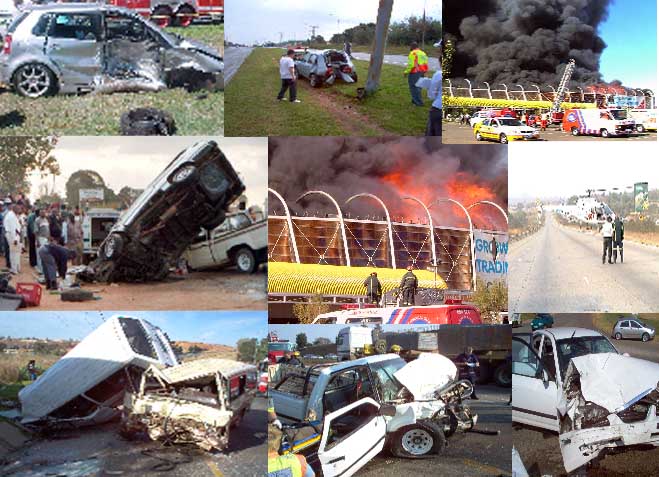
Death toll in South Africa over the Christmas Holidays 2005

Traffic Collisions

Total deaths of 1416
Pedestrians 600
Passengers 414
Drivers 289
Not Specified 113

10% of total were children between the ages of 0 and 14 years.


Statistics released by national press

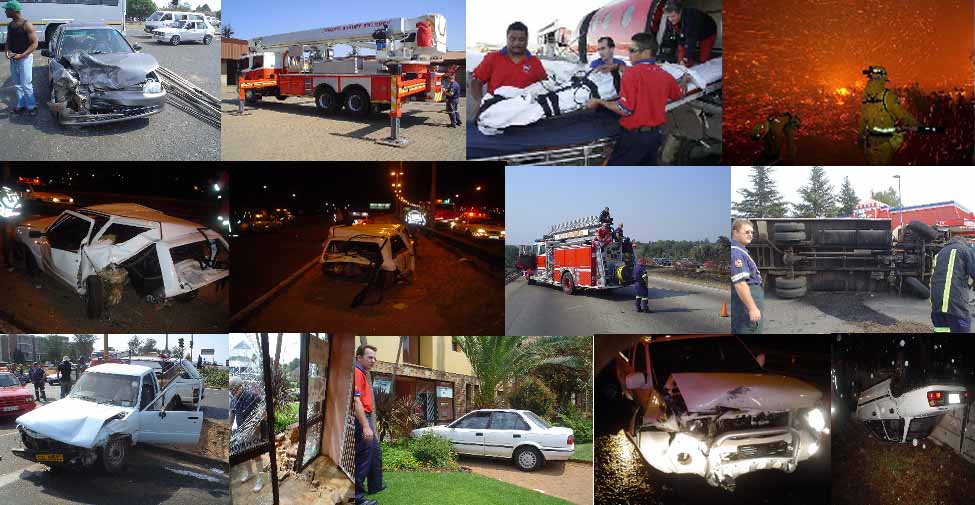
Traffic Collisions Part4

Wednesday, December 21, 2005

Only In A Perfect World

Paramedics - The History

Prior to the 1970’s, ambulances were only staffed with first- aid level responders and were frequently referred to as ambulance drivers. There was little or no regulation of the standard of training or treatment that was given to patients. After the release of the National_Highway_Traffic_Safety_Administration’s “White Paper” on motor vehicle fatalities, an effort was made for training paramedics.

The first paramedics began operating in the late 1970’s, with expansion throughout the country.

Gone are the days, at least in the urban setting, of untrained ambulance drivers. Those in need of emergency medical care have come to expect highly trained medical professionals within 10 to 15 minutes of the onset of their emergency.

Do you know your local EMS number?

Source
http://www.splammer.com/paramedic

Sunday, November 27, 2005

Laughter the Best Medicine

Did you know that according to research, children laugh about 400 times a day while adults only laugh about 15 times a day? Some how, as we got older we lost the ability to laugh. Could it be that putting more humour and laughter into our day will improve our health and wellbeing?
In an article written by Drs. Gael Crystal and Patrick Flanagan they stated that; “Scientists have found that laughter is a form of internal jogging that exercises the body and stimulates the release of beneficial brain neurotransmitters and hormones. Positive outlook and laughter is actually good for our health! More than ever, scientific evidence suggests that laughter really is one of the best medicines.”
According to a study done by Dr. Tan from California's Loma Linda University Medical Centre, laughter can have a huge impact on our immune system. The university conducted a study of average adults. One group of adults was subject to an hour of laughter through watching videos of comedians and another group sat quietly out of earshot of the first group.
What did they find? Through regular blood tests carried out during the comedy shows they found that the laughter group had an increase in good hormones and a decrease in the body’s stress hormone. Dr. Tan concluded that; “Laughter brings a balance to all the components of the immune system.” Some clinics are now using this information with their patients. They are using laughter therapy to replace anti-depressants and to reduce the use of painkillers. According to researchers faking laughter will also produce the same health and wellbeing results as real laughter.
Do you need to improve your ability to laugh more?
Well here are some tips from Family Scientist, Herbert G. Lingren to help all of you, who are humour impaired, to add laughter and humour to your everyday life.
1. Hang around funny friends, or better yet, marry a funny partner.
2. Start looking for the absurd, silly, incongruous activities that go on around you each day.
3. Take a 5-10 minute humour break each day. Read jokes, add to a humour notebook, and listen to a funny tape.
4. Rent a comedy video, go to a funny movie, and watch humorous programs on television.
5. If you hear a joke you really like, write it down, or tell it to someone else to help you remember it.
My final tip would be to spend more time having fun with children maybe you will catch a few hundred laughs off them! Better still join a laughter club or start your own.


by Lisa Branigan
http://www.articlematrix.com

Wednesday, November 02, 2005

Can your ignition identify you?

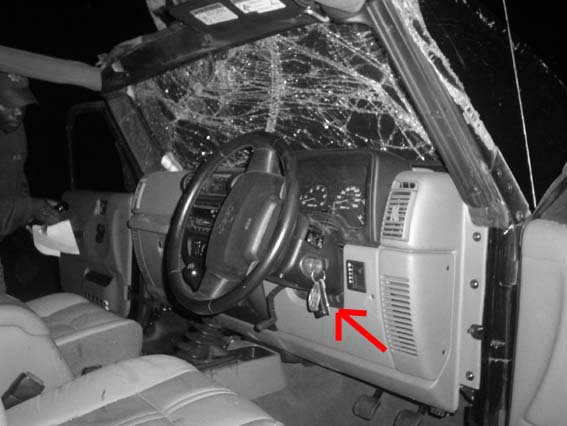
In most of the accidents keys are left in the ignition, regardless if the vehicle is running or not. The reasons for this is simple, look at the structure of a key and push it into the ignition slowly, it feels tight.

Provided that the steering column of a vehicle is doesn't get ripped out, your keys will stay in the ignition until someone removes it.

CrisisOnCall has developed a unique identification system that enables paramedics to quickly identify a patient and get all their personal information in one toll free phone call. Windows are often smashed or broken during an accident, thus stickers doesn't always help.

What do you do when you aproach an accident scene, SAFETY FIRST? One of the safety measures is to ensure that the vehicle is switched off and then you will see some life saving information. Be on the look out for these types of identification!